GoatTracker Tips: Warm Bass Sound
One of the most distinctive components of the Commodore 64 is undoubtedly the SID sound chip. In the 1980s, this tiny piece of silicon created a sonic character that remains difficult to reproduce accurately even today. Modern software emulators often come close, but members of the demoscene and retro music communities believe there is something about the sound of a real SID that simply cannot be replicated perfectly.
We spoke with a well-known SID musician about what makes the bass in C64 music sound truly warm. The answer was surprisingly complex. Although the SID's three sound channels may seem simple, combining waveforms, using filters, and fine-tuning the ADSR envelope all contribute to the final sound.
Most classic SID bass sounds are created by using a sawtooth or pulse waveform and then applying a low-pass filter. As the resonance is gently increased, the sound begins to sing - this is the distinctive character that makes so much C64 music instantly recognizable.
SID musicians also often talk about how different versions of the SID chip behave differently. Early 6581 models, for example, tend to produce slight distortion when the filter is used. This distortion was long considered a flaw, but musicians later realized that it is precisely what gives the bass its characteristic warmth.
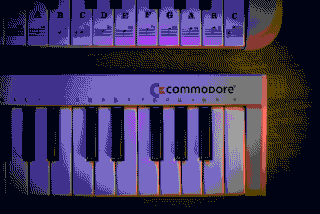
When creating SID music, musicians often think like sound engineers. Writing the notes is not enough - the timbre itself must also be composed. In a good bass line, for example, the attack and decay values of the envelope are just as important as the melody itself.
Modern SID musicians often use the same tricks as demoscene composers did in the 1980s. Fast arpeggios, waveform switching, and subtly modulated filters can produce a remarkably rich sound that goes far beyond the apparent limitation of just three channels.
When we asked what the secret was to a truly warm SID bass, the musician simply laughed. He said there is no single secret. Instead, it is a series of small decisions: choosing the right waveform, carefully tuning the filter, and of course, plenty of experimentation.
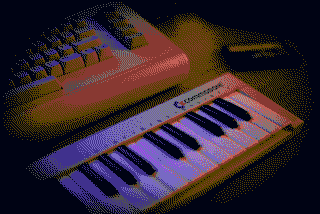
Perhaps that is exactly why the SID sound has remained so alive more than forty years later. It is not merely the sound of an old computer, but a creative tool that has inspired generations of musicians. And if the saying is true that every good bass should be felt in your chest, then the SID chip already knew that back in 1982.